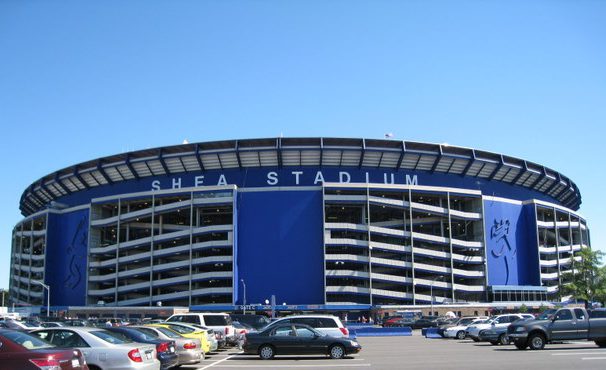
One Heckuva NLDS

Jeurys Familia stood on the mound, thinking.  He’d retired the first two hitters of the ninth, up a run, and now faced Howie Kendrick,  with his full arsenal available.

He looked in to d’Arnaud.  He got his sign, and was ready.  He came set, and went into his windup.

———————————————————-

It’s interesting, when you think about it, that this all began with a Daniel Murphy home run.

Yes, Murph, apparently extremely intent on extending his Mets tenure as long as possible, took Kershaw deep in the fourth inning of game one, putting the Mets up 1-0 and giving Jacob deGrom a lead that he would not relinquish.  Wright drove home two more – with his only hit of the series, which would have been a problem had everything not happened the way it did – and Clippard gave one back, but Familia sealed it.  1-0.

Then came game two, which has the misfortune of being known to posterity as the Chase Utley game, but was also pretty interesting in its own right.  Cespedes homered.  Conforto homered a few batters later.  The Dodgers got one back, and then four more – undeservedly, as everyone but Chase Utley has admitted – and Kenley Jansen sealed it again.  1-1.

Having gotten through Kershaw and Greinke, we figured that we’d tee off against anyone who wasn’t, well, Kershaw or Greinke.  True enough, Brett Anderson, who seemed more concerned with anger tweeting a-la-Donald Trump than actually pitching. It showed.  The Mets teed off, Cespedes hit one that still hasn’t come down, and Chase Utley got booed so loudly that Alex Anthony had to stop his introductions because no one would have heard them.  Goeddel gave three back, so Familia came in to nail it down.  He retired every batter he faced.  2-1.

Then there was the potential clincher, with Matz – noted, about 1000 times, for being the pitcher with the 2nd fewest, or thereabouts, regular season starts prior to starting in the postseason – on the mound.  Matz faced Kershaw.  They were both good.  Kershaw was better.  A dinky little pop-up from Adrian Gonzalez, which could have gone either way but ended up going theirs, should have been the third out.  It fell in.  Turner doubled in the next two.  3-0.  Murph took Kershaw deep again, because why the hell not, but that was all.  We had several opportunities, but none came to anything.  2-2.  Winner take all, game five in Los Angeles, Thursday night.

We were inundated with statistics as Wednesday became Thursday and the game still stubbornly refused to start: The Dodgers had never lost a winner-take-all, the Dodgers had lost every series in which they’d lost the first game, Greinke hadn’t lost at Dodger Stadium at all that year…and so on, and so on.  No one was interested; none of that stuff really matters, especially when your first postseason in nine years is in imminent danger of coming to a premature end.

The moment didn’t have enough poignancy, I decided.  Well, there’s only one solution to that: I’d make my own poignancy.  Wednesday afternoon, as soon as my Spanish class ended, I walked down to CVS.  I bought three bottles of root beer.  Back at my dorm, I labeled the caps.

NLDS, NLCS, WS

If the Mets won, I’d shake up the NLDS bottle, open it up for celebration, and get ready for a tough NLCS matchup versus the Cubs.  If the Mets lost…well, I spent some time figuring that one out.  My plan came together eventually: if they lost, I’d drink one cup’s worth of the NLDS bottle to celebrate a quality season, and dispose of the rest somehow, without drinking it.  Then I’d put on Grown Ups, and try to pretend that baseball wasn’t irrevocably over.

As Thursday dawned, and the game approached, I passed the time every way I knew how: watching old episodes of Whose Line Is It Anyway, trying to get some sleep but not being able to, watching old compilation videos of Whose Line Is It Anyway, and getting most of my work done for the weekend, in case of potential NLCS games.

Game time approached, and my excitement built as it did.  Around 7:30, I retired to my room permanently, and waited for the game to start.

What a start it had, too – Granderson hit a slow grounder that Greinke couldn’t quite get to, Turner flipped to first, Grandy was called out, Grandy had actually been safe, we could…you know the deal.  We challenged, Grandy was safe, we had the beginnings of a Greinke rally.  Sure enough, after the Captain struck out, Murph – because of course – doubled him home and went to third on an error.  Murph could have scored too, but Cespedes struck out on three pitches, and Duda made an out, to end the inning.  I’ll say this, about Cespedes: I know he’s got some power and all, but I don’t particularly appreciate the fact that every time he hits a home run, the size of his swing increases by about 300%, and the next 18 pitches he sees are automatic swings-and-misses.  Not that he can’t snap out of it; it’s just kind of irksome.

We had the lead, but deGrom gave it up quickly (I’ll take things you don’t expect Jacob deGrom to do for $800, Alex).  The Dodgers scored two.  They too could have had more, but they didn’t.  Story of their game, you could say.

From there, it went on much as the series had – the Mets offense couldn’t touch Greinke, deGrom bent but didn’t break, and the score stayed 2-1 into the fourth, when Murph, in a truly inexplicable twist of baserunning acumen, advanced two bases on a walk, which I didn’t even know was possible, and then scored on a d’Arnaud sac fly.  “Manufacturing runs”…that’s something we didn’t hear during the stretch when we were hitting four home runs a game, isn’t it?

We’d tied it, and we had deGrom, somehow not allowing anything, but we needed the lead, and Murph – at this point, you knew it was Murph – took on Greinke, and came away solidly victorious.  As you may have heard, only one batter homered off both Greinke and Kershaw this regular season – Kole Calhoun.  Murph did it in five games.  You want him back.  I want him back.  We need him back.  Come on.

With the lead, now.  DeGrom was done.  In came Thor.  Ernie Johnson made a reference to it being tough to hit a guy that throws 100, and sure enough, Syndergaard’s first pitch came in right at the century mark.  He was dominant: one scoreless inning, one walk, no hits, one giant infusion of momentum.  Syndergaard got his guys and walked off the field.  He was done – why, we’ll never know, because he certainly looked like his arm could’ve handled another inning or seven – and Familia was warming.

Well, Familia entered, and you know how that’s worked for the Dodgers so far this series.  Two innings: six up, six down, five who were angry, and one – Chase Utley – who doesn’t feel emotions.  With two men out, Howie Kendrick was the Dodgers’ last hope.

———————————

With the count 0-2, Familia considered his repertoire.  He thought, and decided to go with a slider, down and in.  He let it go.  Right on the money.  Kendrick had no chance.  Put in the books.

Ballgame.  Series.  Mets advance.  Worded however you want it, it comes down to the same thing: Mets win, Mets continue to play, Mets are a series away from World Series competition.

———————————

Eventually – two weeks from now, or four weeks, or perhaps after a rousing all-night celebration of a World Series win – I’ll drink one final toast, and lament the season’s end while celebrating all that came with it.  But not yet.  We’ve got an NLCS to win.

Standard

A Hell Of A Ride

So that’s it.

The Mets ended their season today with a 1-0 win, beating the Nationals for their 90th win of the season. The last time they won 90 was 2006. That was a good year. This one is better.

Sandy Alderson took a lot of heat for his ambitious 90 win goal last year, and barely less this year, but he kept it up. It’s only fitting, I suppose, that the win that, to this point, defines Sandy’s tenure is a 1-0 shutout, with all the pitchers contributing and Curtis Granderson, who Sandy grabbed despite the protestations of many (including myself). When Granderson batted .229 last year, we thought we were right. We weren’t.

It’s even more fitting, I think, that this season, a high point in Sandy’s tenure so far, ends a 1-0 win. Sandy came in in 2011, took a year to look around, and made some moves before 2012. The first game of the 2012 season was a 1-0 win. It was Wright instead of Granderson who drove in the run. It was Frank Francisco instead of Jeurys Familia that had nailed down the save. It was Johan Santana instead of Jacob deGrom who had a scoreless but ultimately aborted start. That team was a fun team. They flirted with contention. Were, at one point, 46-39, 4.5 games back of the Nationals.

2012 – what a fun year that was. Wright batted .415 in April, Tejada was batting .320 until he slumped through September, Scott Hairston came from nowhere to hit 20 home runs, R.A. Dickey, of course, came from the same place to win 20 games and the Cy Young…that was a fun year. We didn’t win anything, but I swear, I thought we could have. Delusional? Probably. Fun? Absolutely.

But the Sandy Alderson era goes back even further, back to 2011, when Sandy came in, brought in superstars like Willie Harris, Ronny Paulino, and Chin Lung Hu, and sat back to evaluate. In the first two months of the Sandy Alderson era, I went to three games – all Jon Niese starts, all wins. Niese beat the Diamondbacks, the Dodgers, the Phillies…and then, for good measure, Dickey capped off 2011 with seven strong innings against the Phillies, on 9/24/11, the day of the immediately immortal Pascucci Blast. That was a fun year too. It’s baseball. It’s always fun.

2012, returning for a moment, was fun for another reason as well. When it started, I was away, camped out in Maine for the summer. Well, not camped out – we were in senior bunk, so we had TV and everything. Thank god, too – how else would I have known, on July 26th, to yell to the one other Mets fan in the group, “Harvey’s got 10 strikeouts through five!”? Yes, 2012 saw the emergence of Matt Harvey, drafted by Omar Minaya, watched by, well, everyone, and impressive at every level. I saw Harvey live that August, when I got home, against the Rockies. He went six, allowed one run. A typical Matt Harvey no-decision. Ramon Ramirez, one of those Alderson acquisitions who just didn’t work out, gave up two, and Frank Francisco gave up two more. With two down in the ninth, the Mets down by three, and two men on, Ronny Cedeño came up. Ronny Cedeño never hit home runs.

Ronny Cedeño got one in the air, down the left field line. It was deep. Citi Field was deeper. The ball died on the track, and the Mets were three run losers.

Welcome to New York, Matt Harvey!

Then came 2013, a quiet, ho-hum, not much there season that I loved just as much as the one that preceded it. I was in attendance the first Sunday of the year. Aaron Laffey pitched. He was just about as good as you’d expect him to be: he went 4.1 innings, gave up three runs, and left. He’d pitch in four games for the Mets that season. His opposition? A young righty that the Marlins had rushed up straight from A ball, named Jose Fernandez.

Fernandez was good that day. He pitched four scoreless. Anthony Recker – he’s still here, good for him – doubled home Tejada in the fifth, and Fernandez left. Murph homered off AJ Ramos in the 6th to cut the deficit to 3-2. That’s how it stayed into the ninth, which is around the time that I noticed my fellow Shea Bridge Report blogger sitting in the section one over from me, a few rows down.

How’s that for luck?

Sometimes, you just know. When Steve Cishek hit Tejada with a pitch after inducing a deep flyout from Duda, I knew. When Nieuwenhuis moved him over to third on a single and went to second on the throw, I knew. When Mike Redmond brought the infield in, I knew.

Marlon Byrd knocked one right past the drawn-in infield. Two runs scored. The Mets won. Hey, maybe we’ve got something here!

We didn’t. It was much of the same that year. I saw a victory over the Yankees (yeah, we swept ’em), a loss to the Cardinals during which I was berated by my friend for overestimating Jeremy Hefner’s fantasy baseball value, another typical Matt Harvey loss (7 IP, 1 ER) to the Cardinals, Matt Harvey’s final start before his surgery, and one last game, from up in the promenade, pitched by a young Georgian named Zack Wheeler. Wheeler was good. The offense wasn’t. The Mets lost again.

Who cared? We were going places.

2014, also known as “when stuff started to get interesting,” started with two new faces: Curtis Granderson and Bartolo Colon. Combined age, 72, combined weight, who the hell knows. Sandy had brought them both in. I didn’t like the moves at the time.

If nothing else, it’s proof that I can be wrong occasionally.

My 2014 started with three losses. Then three wins. A loss, another win, another loss, another win, two losses, three wins, two losses. That’s the season in a nutshell. Outside the nutshell, there was more. Dillon Gee started on Opening Day (jeez, remember him?), Wheeler continued to impress me, and on April 19th, I saw one of the most thrilling two run losses of all time.

The Braves were the opponents, back when the Braves were good. The Mets were down 4-3 going to the ninth. Jose Valverde came on. Before the season, I’d thought that he might be good. My good will had already worn off by this point. Jordan Schafer reached on a bunt, Valverde walked Freddie Freeman intentionally, and Justin Upton hit a three run homer. It’s so simple.

Well, not so simple, actually. Kimbrel came on in the ninth. Up four runs, not a save situation. Maybe that’s why he wasn’t ready.

Omar Quintanilla (another guy who I would love back the next time we’re really bad) grounded out. Eric Young Jr. was hit by a pitch. Murph singled. Wright, the notorious Kimbrel-slayer, doubled to deep right. Tying run at the plate.

Granderson struck out swinging, but Chris Young – I don’t want him back ever – singled to center, and Murph scored. Wright moved to third. With Duda at the plate, Young stole second. Kimbrel walked Duda. Tying run in scoring position.

Kimbrel was out. Jordan Walden came in. D’Arnaud at the plate. D’Arnaud fell behind 0-2. Walden delivered home once again. D’Arnaud swung.

From up in the promenade, I was right behind the plate, and I saw this ball perfectly. I was certain, absolutely certain, that it was going into left field. Then I remembered that Andrelton Simmons was the Braves’ shortstop. He picked it, no trouble, and threw over to first. Ballgame.

Well, who cared? Jose Valverde would be gone soon.

After that loss, when we eliminated the Braves from playoff contention that September, it was doubly sweet.

And that brings us to 2015, where anyone who’s anyone knows the story. The Mets were really good. Then they weren’t. Wright was gone for a while, but came back with a bang, literally. They weren’t doing so well, so they brought in a few nice hitters from the Braves. They almost brought back a former Met, who provided some nice moments in Shea Stadium’s sunset years, but they didn’t. Wilmer Flores proved that there is crying in baseball, and we love him for it. Instead of Gomez, they brought in a monster. A raccoon-parakeet monster. A guy who you just can’t help but love, even if he occasionally makes you nervous with that underhand flip that he seems to have patented.

They brought up a young outfielder from Oregon who goes to all fields with a swing that is almost mellifluous. Their closer went down – for a while, probably, because no one likes a juicer – so they brought in a new guy. He may be the best closer in Mets history.

Atta boy, Sandy.

So that’s where we are now. This team, planned for years and thrown together over a few months, has played better than anyone (besides myself and Logan, based on our spring predictions) had a right to suspect. It’s nigh on NLDS time, and Citi Field will be rocking. Maybe it’s not Shea, but hell, we’ve got other things to worry about right now.

So here’s to the captain, for sticking it out and giving us his all. Here’s to deGrom and Harvey and Syndergaard, for showing us the value of intimidation, and here’s to Matz for showing that we might have yet another formidable mound presence. Here’s to Familia, for being straight-up dirty, and here’s to Bartolo, for showing that you really can’t judge a book by its cover. Here’s to Johnson and Uribe, for reminding us what professional hitters can do when you’ve got Mayberry batting cleanup, and here’s to Conforto, for making me swoon with the beauty of his opposite-field home runs. Here’s to Robles and his quick-pitch, Gilmartin and his brief tenure as a 1.000 hitter, and Duda and his raw power and comedic level of humility. To Granderson, for going from burned out to spark plug. To Murph, for having the same season as you’ve always had. To d’Arnaud, for showing us that maybe offensive catchers are not a thing of the past. And to Lagares, Niese, Cuddyer, Tejada, Flores, Recker, Plawecki, Reed, Parnell, and everyone else who I’m sure I’m forgetting – you all did your parts, and we thank you for that.

So on to LA, and the NLDS. Maybe we’ll win. Maybe we won’t. It’s been a hell of a ride either way.

Ladies and gentlemen, your 2015 New York Mets.

Standard

The Price Of Power

For the longest time, Citi Field was a ghost town.  A ruin.  A shell of a stadium.

That was when the Mets were bad.

Well, now they’re good.  And almost too quickly to believe, Citi Field is filling up again.  Tickets are selling, fans are entering in droves, and once again, the Mets have a full audience to play for.

And I thought that was a good thing…until yesterday.

Let’s talk about yesterday, because it deserves some mention – beyond the absolutely dreadful loss of two key players, the Mets won their eighth straight, and completed a sweep of the Marlins.  Taken completely out of context, it was a good game – and indeed, for the people in the stands, it was out of context, as most of the fans didn’t learn of the extent of the injuries to both d’Arnaud and Blevins until after the game.  For fans in the stands yesterday, there was a hell of a time to be had.

Now, I’m not against bandwagon fans in principle.  Here’s what I am against: fans who come out to a ballgame as if it was some kind of fun activity like going out for coffee, as opposed to something that a substantial number of people really care about.  Fans who go to Citi Field because they’ve heard the name “Matt Harvey” bantered about recently and they wanted to see him, then lose interest after Matt runs out of gas, and start doing whatever they want in the stands to entertain themselves.

Now, here’s something else that may surprise you: I’m not against the wave, in itself.  In the sixth inning of a 10-1 loss, it’s something for the crowd to do to keep occupied.  Anyone who’s still at the game at that point is a fan; you can do the wave if you want.  However, here’s something I am against: a crowd, composed mostly of people whose idea of baseball knowledge is knowing that the Mets and the other team keep taking turns on the field, starting the wave around the fifth, keeping it up pretty much nonstop until the ninth, and complaining mightily when one section – mine – decided, stubbornly, not to oblige them.

Here’s a message to the fans in section 529, and in particular, the two drunk-looking guys who stood for almost the entire second half of the game, yelling over at our section, making rude gestures, and generally communicating the concept that anyone who doesn’t do the wave is not cool enough for them: it’s a baseball game.  It was a hell of a game, too.  A one run game, going to the ninth.  You call yourself a fan?  You’re getting excited that the Mets are suddenly winning?  Well then, here’s the first step to being a real fan: when Alex Torres enters the game in the eighth with two outs and the tying and go-ahead runs on base, you don’t do the wave.  Honestly, it’s just not the time.  You know what else you don’t do?  You don’t A) start the wave, then B) literally start booing the section that stopped it (louder than anyone booed any Marlins players, I might add).  You are at a baseball stadium, watching a baseball game.  You are not coaching a wave-doing team, and continuing to attempt to start the wave, while Alex Torres is LITERALLY ONE PITCH FROM GETTING OUT OF THE EIGHTH, is absolutely asinine.  You know what fans do?  When a pitcher gets a strikeout to end a key inning, they cheer loudly.  Here’s what fans do not do: fans do not fail to notice that a pitcher has ended an inning with a key strikeout because they were too occupied with chastising another section for not doing the wave.  You’re at a baseball game.  If you don’t want to watch, that’s fine.  Just keep to yourself.  But know this: some people are real Mets fans.  When they go to Citi Field, here’s what they want to do (I can imagine how hard this may be to comprehend, at a baseball stadium) – they want to watch a baseball game.  And literally booing an entire section while Alex Torres is working his heart out and ultimately succeeding to get the Mets to the ninth is not something that “real” fans do.

And one more thing, to all the people who went to the park to see Matt Harvey and lost interest around the fourth inning: there are very, VERY specific times that it is okay to boo a Met.  Here they are, for the most part: you can boo a Met if he has displayed a lack of interest and effort for a prolonged period, then fails at an important moment of the game.  That’s it.  You do not boo a player who is out on the field, working his hardest to get the outs that his team – our team – needs.  In the eighth inning, a group of fans – led, it barely need be said, by the same drunk guys who booed a section for not doing the wave – decided that the game was going too slowly.  Never mind that Buddy Carlyle was on the mound, working his hardest to retire the Marlins: this group of fans, who just NEED you to know how cool they are, decided that Carlyle was not working quickly enough for them. So they decided to boo him.  That’s right: a Mets crowd booed a Mets pitcher, working in a jam and trying to maintain a lead, for stepping off the rubber.

Another message to people who plan on attending a Mets game in the near future: when a pitcher is working out of a jam and trying to contain an opposing offense, you do not boo him for taking a few seconds too long.  This should not even need to be said; apparently, the stands yesterday were filled with people who had been promised a Matt Harvey complete game, because as soon as Matt left, and the game took on a normal baseball pace, these people completely lost interest.  Yeah, you’re great fans, absolutely tuning out of a game after your starter leaves in the seventh.  But back to the point: you DO NOT boo a Met for making the game go, in your most probably incorrect opinion, too slow.  If you want to boo a visiting pitcher who makes several pickoff throws in succession, go ahead.  But don’t do it to a Met.  You look like a bigger idiot than M. Donald Grant.

So you know what?  It’s great that Citi Field is selling out once again.  But I hope, for the sake of those Mets fans who actually care about what the Mets do, that fans like this lose interest quickly.

Standard

Projecting ’15

With Opening Day on the horizon (along with, regrettably, rain), I’m sure you are asking yourself one question:

“How do the writers of the Shea Bridge Report think the team is going to do this year?”

Well, wonder no more, because today, we are proud to present a two-part series, Projecting ’15, in which we will, make no mistake, project ’15.  This team is one to get excited about – more on that in a moment – and the time is near again to get lost in a season of Mets baseball, and more than that, quality Mets baseball.

So, without further ado, Projecting ’15.

Offense:

While this team has been heralded as an up-and-coming pitching powerhouse, the offense, despite the last few years, is nothing to be scoffed at.  We start with the infield – and what an infield it is.

You’ve got Travis d’Arnaud behind the plate – and let me say right now, I am an unapologetic d’Arnaud fan.  I’m sure I don’t need to cite that all-important split yet again – after his recall from AAA Vegas last year, d’Arnaud batted .272 with 10 home runs.  Offensive catchers are, generally speaking, among my favorite player types in the sport, so you can imagine what I see in d’Arnaud – a potential gamechanger from behind home plate. Yes, he has to improve his defense, but more importantly, yes, he can improve his defense.  It can, and will, happen.  So what do I see from d’Arnaud.  Power.  18, 20 home runs.  And average.  About .280, to be exact.  Call me optimistic; just be ready to apologize when d’Arnaud wins the NL Catcher’s Silver Slugger.

Lucas Duda at first is an X-factor on this team – another 30 home run, .350 OBP year from Duda will give the Mets a legitimate slugger, not just a hitter, in the middle of the lineup.  The question about Duda is not whether he has the power to repeat his 2014 home-run hitting performance: a cursory glance says that he does, and easily.  The question is whether he can sustain, or improve upon, his 2014 .253/.349/.481 triple slash, because if he can sustain it, he’ll continue to be one of the more dangerous first basemen in the National League, never mind any improvement, which could make him a bona-fide star.

At second, Daniel Murphy is the closest thing the Mets have to a proven commodity – this may be his last year as a Met, but it’s also a contract year, so don’t expect a downturn in numbers.  Since 2012, Murphy has hit .291, .286, and .289, while playing 156, 161, and 143 games, respectively.  He had a bad OBP year in 2013 – .319 – but brought it up to .332 in 2014, still not great, but certainly serviceable.  He also brought his strikeouts down, from 95 to 86.  It’s hard to project any downturn from Murph, but at the same time, it’s hard to justify projecting improvement – a .290 batting average seems like the likeliest outcome, although I do like the way Murph’s plate discipline has improved, and as such, look for an increase in OBP.  However, it’s a contract year – if Murphy’s batting .315 at the All Star break, nobody will be overly shocked.

At short, you’ve got (yawn) Wilmer Flores.  Wilmer’s got his detractors and his advocates – the one thing the argument comes down to is whether the real Wilmer is the first five months of 2014, September of the same, or better than both of them.  Flores struggled from March to August, but in September and October, hit .278/.313/.500 with four home runs.  Where’s the true Wilmer?  About there, in my mind.  Although I’m not ready to put him on the level of, say, Alexei Ramirez, his minor league numbers since 2012 are too good to ignore.  Wilmer will hit, and I say that with confidence: a .265 average seems realistic, as do 12-18 home runs. Defense?  That’s another story.

Then you’ve got the captain, David Wright.  This is a tough one – all indications from Port St. Lucie are that he’s swinging the bat like he’s rediscovered his form.  For now, I’ll take it.  He looks to have recovered his power, and just as importantly, is hitting the ball to all fields, just the way he did in his heyday of 2005-2008.  As has been repeated approximately 249,851 times, the shortened fence in right should net him a home run here and there.  This one may strike some as unrealistic, but David Wright is 32 – as I’ve said, he’s nearing the end of his prime, not his career, and as much as I worry about his 2014, until proven wrong, I’ll trust that he’s back and rearing to go.  Numbers? .300 average.  20 home runs.  Next?

The outfield starts with Michael Cuddyer, the most exciting new Met, narrowly edging out Sean Gilmartin.  Everyone seems down on Cuddyer, but I’ve learned not to trust the instincts of Mets fans, who moaned and groaned when the Mets picked Matt Harvey (I’ll get there).  Cuddyer, in Spring, looked great – he’s still got the bat speed and the quick swing, and most noticeably, the power – he led the club in spring home runs, with six.  Again, maybe you’ll say I’m too optimistic, and maybe you’re right, but I trust Cuddyer when he says that his injuries last year were of the flukey nature.  Just look at his career – before last year, he played at least 101 games a year from 2009-2013, and at least 130 games in four of those five years.  Yes, he’s getting up there in age, but no, that does not mean that he can’t be a productive hitter in an again-shrunken Citi Field.  I don’t see Cuddyer batting .300 – but I do see him getting pretty damn close, .280 or .285.  And he’s got the power – 20 home runs seems like a middling estimate.

In center you’ve got Juan Lagares, proud owner of a four year extension and a gold glove.  His defense speaks for itself, but his offense?  Well, it could, with improvement, take this team to the next level.  In his first two years, Lagares’ OBP has been 40 points higher than his batting average, and that hasn’t varied much from year to year.  From 2013 to 2014, he increased both those numbers by 40 points, and also decreased his strikeouts by nine while increasing his stolen bases.  The stolen bases are one number which should definitely go up – he stole 20 to 25 a year in the minors, and near the end of the 2014 season, he was given must-run signs, which got his running game going.  Just based on his Spring, his plate discipline and power have improved as well.  I’ll stick to my earlier predictions here – .290, 10 home runs.

Rounding out the outfield is Curtis Granderson, who is just infuriating to watch.  His arm?  His wildly flailing swing?  Ugh!  But there may be improvement coming from that former non-entity in right: reunited with Kevin Long, his swing, at least during Spring Training, was noticeably shorter and quicker.  I still don’t see him improving much, but especially with the new right field fence, an increase in power seems likely.  For Granderson, I’ll set aside a .230 batting average, and 24-28 home runs.

Then you’ve got the bench, which honestly, I’m not crazy about.  In particular, I don’t like the choice of John Mayberry Jr. over Eric Campbell.  Eric Campbell is a legitimate hitter with room to develop; John Mayberry Jr. is 30 years old, and hit .212 last year.  Frankly, not carrying both of them is somewhat ridiculous, and drastically thins out the bench.  With that said, I’ve liked Kirk Nieuwenhuis for some time.  He vastly improved his plate discipline last year, to the tune of a .346 OBP, and with semi-regular playing time filling in for Cuddyer and Granderson, his offense will only improve.  He’s got some untapped power potential as well.  The bench is a bench – it’s not an above average bench, as the Dodgers and Justin Turner have, but it’s a serviceable, trustworthy bench.

Starting Pitching:

Mets fans, despite the fact that our team is more or less defined by the word “believe,” are, for some reason, reluctant to recognize the potential that the 2015 rotation has.  Five names: Harvey, deGrom, Colon, Niese, Gee.  Three pitchers who have, at one point or another in their careers, won at least 13 games.  Two others whose track records say enough.  This staff is GOOD.

Despite what the Baseball Maverick says, Bartolo Colon is not the ace of the staff.  However, he will start on Opening Day.  As I’ve written, he may actually be the worst starter the 2015 Mets have.  Further, the drastic decrease in his numbers from 2013 to 2014 is quite worrying, as if the fact that as if inversely proportionate to his WAR, his stomach seems to be increasing exponentially.  Colon, to me, is most likely to be A) replaced by Noah Syndergaard or Steven Matz in June or July, of B) traded around that same time.  Really, what’s the use of keeping him around the entire year?  However, if he does stay, I’ll be generous, based on his 15 wins last year: let’s say, 12 wins, 4.25 E.R.A.

After Colon you’ve got deGrom, whose Spring has impressed me somehow even more than Harvey’s.  Maybe what it is is his remarkable consistency: you could compare footage of his last start of 2014, and his last start of Spring 2015, and you could not spot the differences, complete with the batter swinging and missing.  The Mets offense has improved this year, and as such, so will deGrom’s win total: in the 15-17 range.  And I’m not worried about a sophomore slump; he’s above that.  15-17 wins, 2.75-2.90 E.R.A.

I had planned save Harvey for last, and then make a joke about how that’s exactly what the Mets are doing, but then I realized that I could do exactly the same thing by putting him third.  So yes: it’s ridiculous that Harvey is being “saved” on whatever ridiculous basis is currently the official story.  Really, I’d rather see deGrom start the opener, and Harvey the home opener, but it’s not happening, so it’s a moot point.  The non-moot point is that Harvey – and his 1.19 Grapefruit League E.R.A. – is back.  He has lost nothing, it appears, and may even have improved on his breaking pitches.  Just like deGrom, an improved offense means more wins: I’ll give him 13-16.  And honestly, bash it if you want, but his stuff is there, and his E.R.A. will be too: 2.50-2.70.

Why doesn’t anyone like Jon Niese?  Since 2012, he’s won 30 games as a Met – more, I might add, than anyone else on the staff.  He also has a 3.49 E.R.A. in that span.  Niese is good – people forget it, but it’s true.  This is his year – his E.R.A. is coming down, and the wins are going up, and you’d better believe that I’m serious.  Jon Niese: 3.00 E.R.A., 15 wins.

Dillon Gee is something of a quandary – he stunk up Citi Field in the first half of 2013, pitched to a 2.74 E.R.A. in the second half, then was average, when not hurt, in 2014.  I think he’s better than people give him credit for, but not much better – certainly a serviceable fifth starter.  If he’s pitching well, he could become a trade chip in the summer, with Syndergaard and Matz waiting in the wings, but again, let’s assume a full season: 3.60 E.R.A., 10 wins.

Bullpen

At the beginning of Spring Training, I would have called this, debatably, the Mets’ strongest area.  Then Edgin went down, and today came the news that Black would also open the season on the disabled list.  Still, however, the pen is – finally – a strength.  Mejia, if shaky, gets the job done.  Familia is superb.  Carlos Torres is good enough.  Same goes for Buddy Carlyle.  After that, however, things start to get murky.

The combination of lefties – Gilmartin, Torres, Blevins, MY GOD THEY’RE ALL THE SAME – seems, while not overpowering, about average.  The worry, of course is that, like most Mets lefty relievers, two of the three will be out for the season by April 20th.  I’m not predicting that, but – make a note of this – I’m not saying it won’t happen, either.

The loss of Vic Black really hurts – he was one of the Mets best relievers last year, and was ready to start 2015 without missing a beat.  He still will in short order, knock on wood, but if we learned anything from the Valverde/Farnsworth disaster last year, it’s that missing your best relievers for even a day – namely, Opening Day 2014 – can be detrimental.  Again, he should be back soon, but every day he misses will be a day that the bullpen is less than it can be.

—————————————————————————————

So there you have it: the 2015 Mets.  Will they be great? Let’s get that out of the way right now – while of course nothing is impossible, this is not a great team.  However, it is a good team.  With improvement where necessary, it’s a very good team.  So, to end Projecting ’15: Part 1, I’ve got a few more numbers.

Projecting ’15 – 2015 Wins: 87

Projecting ’15 – Playoffs? Yes

So take that, mull it over, bemoan my optimism, and maintain your dour anger.  When the Mets lead the wildcard race on August 1, I will gladly accept your apologies.

Standard

Face Of Virtue

It should only serve to draw attention to the unwavering loyalty of Mets fans, even in the face of Ponzi schemes, annoying owners, and malls being built on our parking lot, that David Wright was able to reach the “Face of MLB” finals two years in a two, and win one of them.

Over its course, the “Face of MLB” competition has faced some – by which I mean, “a lot of” – criticism, mostly for being annoying, time-consuming, and absolutely meaningless, much like Jim Duquette’s TV analysis. However, this is one point for which Mets fans should appreciate it: the contest is an awareness raiser. No rational person, after seeing David Wright in the finals two years in a row, could logically deny the disproportionate loyalty of Mets fans to their royally underachieving team. The competition allows the world to see that despite the W!lpons’ best efforts, we have not given up on the team, and we don’t plan on doing so any time soon.

And when we hear that, we think, “How could we not love this team, when our captain is a guy like David Wright?”

At this point – a point which comes after six consecutive losing seasons, and eight seasons since our last postseason appearance, if you’re keeping score at home – David Wright is, quite simply, the last constant left in the lives of Mets fans. He’s been here since 2004, he’s been, for the most part, offensively formidable since 2004, and whether you appreciate his contribution or not, he’s our captain, for whatever that’s worth.

No, David Wright is not the Face of MLB. He, a 32 year old third baseman on a perennial cellar-dweller, went up against an up-and-coming young player on a defending World Champion – and just barely lost. That speaks to two things: the completely irrational loyalty of Mets fans, who vote for their kind-of star even as the team begging them to vote makes barely a tangible improvement over one of their most important off-seasons in recent memory, and the transcendence of David Wright, who wins the vote of the country outside of San Francisco even as his statistics slip and his team continues to lose.

So why does almost everyone, save those bitter fans who don’t appreciate what he’s done, love David Wright so much? Well, for one, he is – and this is unusually rare among Mets – loyal. Even the franchise himself, Tom Seaver, demanded a trade when the adversity in New York became too much for him, but David Wright signed on for eight years, at what was probably a discounted rate and on nothing but blind faith in this ownership group, this team, and this city, because he is more than a baseball player. He is a New York Met.

Beyond this, David Wright can really play. Even right now, when whispers abound regarding the fact that maybe, just maybe, David’s time as a star could be ending, a resurgence is by no means out of the question. David Wright played 156 games in 2012. In 2013, he played 112, losing the remainder of the season to a flukey injury. In 2014, he played injured almost the entire year, missing time and losing productivity because of it. But now? A full offseason to rest, recover, and rebuild? Despite the fact that for some reason, many Mets fans have taken it upon themselves to assume the roles of naysayers in the valiant return of David Wright, a return to stardom for David Wright is by no means out of the question.

For some reason, even those who claim that Wright may return to full strength damp down their predictions: “For Wright, A .280 average with 10-15 home runs is a realistic and productive projection.” Why, I ask you? David Wright may be aging, but he’s 32, not 38. He’s at the tail end of his prime, not his career. Can David Wright still hit 20 home runs? Of course! That’s not to say he will, but he was on pace for 25 before his injuries in 2013, and despite the general gloominess surrounding his return, I see no reason to distrust him, our captain, when he says that he is fully healthy and feeling ready to return. And can he return to his days batting North of .300? Again, why not? We may be proven wrong, but until that time, again, I see no reason not to believe that his decline last year was anything beyond nagging pains and a bad shoulder. And again, with a full offseason of rest, healing, and strengthening under his belt, a return to form, while not altogether guaranteed, is most definitely not impossible.

And you know what else? Even disregarding Wright’s numbers, he still stands alone, or at least in a highly restricted area, as a player who genuinely cares about winning ball games for the fans. Simply put, most everything David Wright does makes someone smile, and if that’s not what Mets baseball is all about, then I don’t know what is.

So in summation, David Wright is not the Face of MLB. He probably never has been, unless you count his appearance on the cover of MLB ’07: The Show. Although he’s been an above-average offensive player for most of his career, he’s never been the best hitter in the league, although according to WAR, he was the second best hitter in the National League in 2007. Although he’s won a few gold gloves, he’s never been the best defensive third baseman in the game. But you know what? David Wright is our anchor, our star, and our captain. So even if he isn’t the Face of MLB, I hope I’m not alone in thinking that he’s done enough.

Standard

The Figurative Spring Of Spring

Spring Training begins tomorrow, and we all know what that means: it means sun, warm weather, and baseball! Except…not really.

When you get down to it, Spring Training is just a month-and-change long festival of bitter-sweetness. It certainly evokes some powerful, positive emotions, but for every positive thought that Spring Training brings, a negative thought is presented to cancel it out, as if Mr. Applegate himself is whispering in your ear:

Hey! It’s Spring!…not for a month…

The Mets are playing baseball again!…not at Citi Field

Matt Harvey looks great!…But Spring numbers don’t mean anything…

Regardless of where you fall on the spectrum of appreciation of Spring Training, there’s one thing no one can deny, or at least, no one should deny: it’s a ton of fun! The Grinch himself cannot deny the squirm of happiness, involuntary or not, that accompanies those first pictures of the sun rising in Port St. Lucie, and the players, all sporting grotesquely ugly beards for some reason, engaging in all manner of training-related activities.

To be sure, much of the exponentially overblown media coverage is just that: overblown, as well as, in the long run, supremely annoying. When Spring Training starts, the few photos a day that come out of players jogging, chatting, laughing, etc. are enough, but not too much, to make any fan happy. By the end of Spring Training, however, the endless projections, analyses, etc. take a toll on even the most anticipatory. In the early days of Spring Training, we look forward to getting to see what our favorite players are up to: by the end, it’s often turned into a completely meaningless set of numbers for SNY’s hired hands to discuss to no end. (“I’m Jim Duquette. Coming up on Mets Hot Stove, Wilmer Flores’ Spring Training ultimate zone rating makes him defensively elite among National League Shortstops. Can he sustain it? We’ll discuss it after the break. Also, how have Terry Collins’ team cooking classes improved clubhouse chemistry? We’ll be right back.”)

Strangely, this, although on the surface it seems nothing but a denunciation of Spring Training as a meaningless waste of time, actually goes to prove my central point, which, if you’ve forgotten, involves how great Spring Training is: despite all the stupidity inherent, we all watch this stuff. Spring Training is not meaningless. The offseason is meaningless. The offseason is endless, unmoving, and, above all, cold. Spring Training spoils us, because it makes us forget about that endless stew of nothingness: the offseason. We have no point of comparison once Spring Training starts: we compare it only to itself, and that’s the wrong comparison to make. No, Spring Training, despite being, in large part, nothingness, is still Baseball, and if you don’t think that’s an improvement over the offseason, all hope for you is lost.

So what’s the point of all this? Well, much like Spring Training, I’m not exactly sure. Maybe the point is to help those who are just desperate for regular season baseball to get through the 50-some-odd days until the regular season begins in Washington. If that’s the point, then take heart: I can indeed assure you that whatever time is left until the season begins will pass in the blink of an eye, and we’ll look back on it with wistful longing during the long, long winter of 2015-16. On the other hand, if the point is to expound on the issue of Spring Training, and whether it’s worth anything, consider the point resolved: Spring Training, if nothing else, has to be worth something, because, again if nothing else, which is itself debatable, it provides a merciful end to the monotonous, frigid, grey-tinged skies and minds of the offseason. And finally, if the point is just to reminisce on the fact that the season will soon begin, and all this mind-numbing prattle will be out of the way, then here you are: before you know it, none of us will remember the arguments they had about whether Spring Training was worth anything, because we’ll be too busy watching Michael Cuddyer hit a walk-off home run against the Braves to sweep the series for the Mets. Or something like that, at least.

So, at its most condensed version, the point, or points, boils down to this: Spring Training is here (as of tomorrow, anyway), and while you don’t have to exhaustively keep up with the latest news from Friday night bowling, or analyze the winners of the annual alligator fishing competition, Spring Training baseball – not regular season baseball, but certainly the next best thing – is right there for your enjoyment, and if you don’t want to grab it by the nose and enjoy it until there’s no fun left to be had, no one can force you, but we’d sure love to see it. We Mets fans like people – most people, at least – to be happy, and Spring Training, while certainly not any bastion of perfection in sports and entertainment, is still baseball, and it’s still there for the enjoying.

So get out there, ignore the mind-numbing and pointless analysis, soak in the shots of the Florida Spring sun, and take it all in. Spring Training is here, and while it’s not regular season baseball, until April 6th at approximately 1:00 p.m., it’s the best thing we’ve got.

Standard

Offseason Dreamin’

Watching Mets Classics recently, specifically the Mets five-run ninth inning comeback against the Cubs on May 17th, 2007, a few phrases came to the forefront of my mind. They were the opening lyrics of the 1989 hit from Tom Petty and the Heartbreakers, Runnin’ Down A Dream.

It was a beautiful day,
The sun beat down…

Despite the excitement of the game, that’s what struck me: the sun. May 17th, 2007 happened to be a beautiful day, at least in the borough wherein Mets fans and, occasionally, quality players habitually converge, and the sun, as Tom Petty artfully put it, was beating down. That sunny summer glow, so conspicuously absent under currently deplorably gray winter skies, was in abundance. Everything the TV showed, whether it was the shoulder of Lou Piniella’s jacket or the area between the mound and the plate back in good ole’ Shea Stadium, glowed with the light of summer. And I, as a baseball fan craving the end of the snow and the start of the Spring, was happy.

I didn’t notice this then – I was more than sufficiently occupied with the rollicking exploits of the 2007 Mets B-squad – but after some careful reflection on what exactly the game had that was so alluring, it seemed obvious: this game embodied the spirits of Mets fans everywhere. This game, at its inner levels, can explain to a neutral onlooker just why we choose to follow this ridiculous team, and exactly what we get in return.

Although the Mets did win the game in question in inarguably spectacular fashion, they unequivocally lost 2007 as a whole. We kept rooting for them in 2008, and we’ve kept it up in the far-too-many intervening losing seasons. We’re not front-runners: if we were, there would be far fewer of us, considering the sparseness with which the Mets get anywhere close enough to the front to run with. A Mets fan is a Mets fan: no one who has experienced baseball at Shea Stadium, and now Citi Field, will skip town to root for the Pirates when the going gets tough. No, Mets fans, who acknowledge this with an air of resignation usually reserved for office workers a few years from retirement, are in it for the long haul. We rooted hard in May 2007, but the true fans among us will root just as hard in May 2015, whether the Mets lead the division or the draft pick race.

Just as we don’t root because the Mets give us wins in return, we don’t root because the Mets spend lavishly on their fans. Although we all loved Shea Stadium, that was almost entirely because of the history it contained, although some, myself included, enjoyed, aesthetically speaking, the openness of the outfield which Citi Field so conspicuously lacks. The last few years have proven that the Mets, or at least the people who run them, know very well that their fans – or, in their minds, customers – will keep coming back whether the bathrooms work or not, whether the concourses are 14 feet wide or 40, whether their seat is perfectly angled towards the pitchers mound. On May 17th, 2007, the Mets played in a ballpark which was torn down a year and change later, to be replaced by, well, you know. THAT’S how much the Mets care about their fans: we loved Shea for its history, and as a replacement, they gave us the history of a team that left New York in 1957, and destroyed one of our best World Series chances since 1986. And yet, despite the fact that Fred W!lpon jammed 50-some-odd years of Mets history into a small side room attached to the gift shop, we continue to root feverishly. Ownership has got one thing right, even if wed’d prefer them to have this one wrong: we won’t be, and have never been, dissuaded by the many inconveniences that the Mets saddle us with. I mean, for Piazza’s sake, it seems like some of the inconveniences the Mets foist upon their fans are merely tests to determine the limits of this fanbase’s borderline unhealthy attachment to the team – and if they are, they succeed: we keep coming back, and we don’t plan on leaving any time soon.

But what particular allure does the Sun hold? Well, at the heart of it, it’s pretty simple: generally, meteorological irregularities, climate change, and playoffs notwithstanding, there’s sun shining down on perfectly maintained infield grass for about as long as there’s baseball. We all love baseball, although the complex reasons why are a story for another time, and as a general rule, sun means summer, and summer means baseball. It’s been that way for as long as most anyone can remember: in Herman Raucher’s Summer of ’42, considered by many the standard to be worked towards of the romanticization of summer, Hermie, the 15 year old main character, is fascinated by two things: women and baseball. Hermie, back in 1942, was a fan of the New York Giants, who are apparently paid tribute by the color of the Citi Field seats (although frankly, I would have preferred orange, blue, green, and red), and in the summer, there isn’t much else to do: in this classic work, one of the earliest idealizations of summer, the main character’s room is festooned with baseball legends. “On the wall, the one with the window, Hermie decorated with autographed photos of Mel Ott, Johnny Rucker, and Hank Danning because he was a Giants fan.” Since 1942, or roundabouts then, we haven’t looked back: we love baseball, and summer is baseball season. As far as it goes, that’s the simple reason why we delude ourselves in the middle of winter into thinking that maybe the sun will come out, and in the same spirit, cheer in unison when the sun emerges from behind a lingering cloud during the 6th inning of a 9-1 loss: we love baseball, and baseball is played in the sun. For still the same reason, the sight of a sunny day is that much more attractive in the dead of winter, when even the most hardcore fans have admitted that it’s too cold for the Mets jacket: it’s a reminder, however irrelevant or indirect, that the sun – and, indirectly, baseball season – is coming.

So why do we root? We root because we’re baseball fans, and more than that, we root because we’re true baseball fans. We’re not at the ballpark because it sounded like fun one night, or because it’s what all the kids are doing these days, but for two reasons: we can appreciate, with genuine intellect, the beauty of the game being played before us, and we care. We care about the result of the contest in which we have no part as much as, or more than, almost anything else. You call it delusional? I call it believing. I call it being a Mets fan.

As the 2015 season approaches, it’s as important as ever to remember just why we love this gosh-darned team. It’s important to remember that a day at the ballpark, at least after the emotions calm down, is just plain fun, whether it results, as it did at various points last year for me, in a dreadful loss on the arm of Jose Valverde or a 14 inning walk-off win. And above all, it’s important to remember that the Mets, despite ownership’s best efforts to the contrary, are not immune to a little good luck once in a while. The dynasty of 1986 disintegrated, but the Art Howe era fell apart equally fast, and was replaced by the Randolph reign, which, if underwhelming, sure was sun while it lasted.

Since 2009, we’ve been beaten down in almost every way possible. I’m not alone in believing that this could – just could – be the year it all changes. I’m not saying that it will – with the Mets, to guarantee anything is outright folly – but it could happen. And if we remember why we root, and stick to our irrationally devoted guns, that may be all we need.

Standard

Believe In ’15: Juan Lagares

Why do I believe in Juan Lagares? It’s simple: he does everything.

Juan Lagares is the best defensive center fielder in the league, as confirmed by the mostly-moronic BBWAA. He is a perennially improving leadoff threat, as evidenced by his 40 point increase in OBP, and 70 point increase in OPS in 2014. He’s an improving threat on the bases, as shown by his 13 steals in 2014. He’s a batter with improving instincts, as shown by his decreasing strikeouts, which were never that high to begin with.

But that’s not all Juan Lagares is: he’s also a player with serious potential. He’s still only 25, and he’s got plenty of time to develop into a full-blown star, or at least a more-serious-than-he-is-now contributor.

Lagares, although he has not shown it so far, has some serious offensive potential: he burst on the scene as a prospect in 2011, when he hit .337 across four minor league levels. In a scouting report on the Mets Minor League Report, Lagares was described as “generating good bat speed,” and “a line drive hitter who uses the whole field well.” He was also said to lack power, but the report may not have been entirely accurate: he was also described as someone who “profiles more as a left fielder.” Lagares’ speed was also on display in the minors: he stole 25 bases in 2010, 19 in 2011, and 23 in 2012, before his major league call-up in 2013.

Over his minor league career, Lagares was never seen as a genuine power threat, because of holes in his swing. Although he has yet to prove these reports wrong at the major league level, his power is primed to improve this year: although no one expects a 30 home run season, 10-15 is not at all out of the question. Overall, his offense has the potential to improve with another year of experience: a .290 average is a legitimate projection, and with a little improvement in plate discipline, that could result in an OBP of .340 or higher. Although it’s by no means a sure thing, with a little improvement, Lagares can quickly and easily become an above-average offensive center fielder.

Quality center fielders and Mets playoffs seasons are already a proven combination: Tommy Agee in 1969, the Mookie/Dykstra platoon in 1986, the always underrated Jay Payton in 2000, Carlos Beltran in 2006. Lagares is not the best of these players offensively, but if he continues to improve, he will more than hold his own, and anything that he lacks on offense, he will make up for on defense.

Juan Lagares on defense is just special. There’s no other word for it. He’s already one of the best defensive outfielders the Mets have ever had, and if he continues to play at his customary high level, an there’s no reason why he shouldn’t, he will quickly become the best center fielder in the game – what with the hardware he took home this season, he may hold that title already – as well as one of the best in Mets history.

I always say that a championship-caliber offense is an offense that doesn’t have any easy outs. In his first year, Juan Lagares was an easy out. Now, he’s one of our better offensive players, especially if his development at the plate continues, and if he keeps up his ridiculous level of play in center field, he’ll almost certainly be one of our highest-WAR players (whether you trust the validity of defensive WAR is a whole other can of beans). There isn’t much set in stone going into Spring Training, which – I will never get tired of repeating it – draws inexorably nearer, but Juan Lagares patrolling center field is all but guaranteed.

The Mets had a whole slew of problems going into the offseason, and they have a whole ‘nother slew of problems coming out of it. But Juan Lagares is not one of them, and it’s feels reassuring to know that for the first time in years, center field isn’t a problem anymore.

Standard

d’Ont Forget About Travis

In approximately 16 days, pitchers and catchers will report to Port St. Lucie for Spring Training. If you add approximately 16 to Travis d’Arnaud’s number, at least before today’s low-key announcement that he would trade numbers with Bob Geren and take number seven, he would wear Mike Piazza’s digits on his back.

Not that I mean to compare them.

With Spring Training only one more than Travis d’Arnaud’s jersey number of days away, I felt it appropriate to look in on Travis d’Arnaud, the impact he can bring to the proverbial table in 2015, and above all, his boyish, fun-loving attitude.

Or at least I hope.

When Travis d’Arnaud made his MLB debut, he immediately inspired a legion of doubters, as he started his career 0 for 10. Indeed, the doubters persist today: d’Arnaud’s contributions so far, and his future as the Mets starting catcher, especially with Kevin Plawecki waiting in the eternally notorious wings, has been debated.

Many people don’t remember that Mike Piazza, in his first season, was no immediate success: in 21 games, Piazza batted .232. This is not – I repeat, I am not doing this, so please don’t criticize me for doing it, because I’m not, I can’t stress this part enough – to compare Mike Piazza to Travis d’Arnaud. For one thing, Piazza’s back probably had much more acne. But still.

With the seemingly endless procession of backups, journeymen, and career minor leaguers policing behind the plate – since 2009, the Mets have used fifteen different catchers – Mets fans have forgotten the true excitement of having a bad-ass offensive catcher. On October 2nd, 2005, the baddest-ass offensive catcher in the history of the game walked away from the Mets after seven-plus years near or at the top of his game. Two years later, a moderately bad-ass offensive catcher departed similarly. Since then, our starting catchers have been offensively debilitated Brian Schneider, three-day wonder Omir Santos, sporadic sparkplug Rod Barajas, eternally mediocre Josh Thole, and somewhat exciting John Buck. And then, finally, in came Travis.

D’Arnaud did not hit well in the first half of 2014 – that’s no secret, and it shouldn’t be ignored. However, equally important is the fact that after his return from Vegas, and the tutelage of Wally Backman, Travis, whose first name I use as a sign of brotherly respect, tore it up, hitting .272 with ten home runs. He also improved in various advanced stats, all of which have names like bURp, and which will not be further discussed here. But if should suffice to say that in the second half of the season, Travis d’Arnaud was one of the better offensive catchers in the league.

You heard that correctly: for almost half a season, the Mets had a player who, for his position, was undeniably one of the better players in the league.

Let’s be honest: besides David Wright, when was the last time we could say that with absolute certainty about any position player, and moreover, any position player who was young, projectable, and under team control? It hasn’t happened until recently, but quite recently, it has happened quite a lot: Wheeler, d’Arnaud, Harvey, Lagares, deGrom, Duda, Murphy…the list goes on, which is why, when I look beyond the pessisism and unbridled despair of Mets fans far and wide, I see a season with genuine potential for success.

This is not to condone what the Wilpon family has reduced our beloved franchise to – what they have done is downright criminal, and although some of their past actions have been debatably justifiable, their recent commitment to malls instead of Mets has just gone to prove that they just don’t care. But Sandy Alderson, despite some dubious decisions, has slowly rebuilt the team, despite the Wilpons’ best effors, and now – admittedly, some four years after the rebuild was supposed to end – the Mets, despite the pessimism that six consecutive losing seasons brings, are genuinely poised to make a run at serious October competition.

So why do I believe in 2015? I believe because the Mets are young, restless, and rearing to go. I believe because Michael Cuddyer, if, knock on wood, his body holds up, will be one of the best offensive outfielders the Mets have had in years. I believe because the pieces for success are all in place, and if they fall the right way, there’s no reason that we can’t succeed, or at least make a run at succeeding. In short, success is by no means guaranteed, but we’ve got youth with the energy to go out there and take it. And it all starts with the man behind the mask, Travis d’Arnaud.

Standard

Laffably Yet Necessarily Avoided

Can you watch a star’s debut and not even know it? Well, maybe.

Watching Matt Harvey’s debut, you knew he was the guy to look for. You saw his blazing fastball and hard slider, and you watched him strike out eleven opposing batters in the blink of an eye, and you knew that he was the real thing. Watching Jose Reyes’ first big league action at the tender age of 19, and getting your first taste of his blazing speed, cannon-fire arm, and infectious happiness, you knew that he was in it for the long haul.

Aaron Laffey? Not so much.

Aaron Laffey’s performance in his Mets debut was anything but special. In fact, the reason the date of his debut, if not the debut itself, stands out, is for the debut of another, much-more-than-equally impressive hurler, who pitched against him on April 7th, 2013: a young Marlin named Jose Fernandez.

Jose Fernandez, making his debut at the age of 19 after the Marlins had, faster than you can say “fire-sale,” run out of pitchers, came into Citi Field for his introduction to Major League opposition. He came up directly from A ball, which just goes to show you that for teams outside of the Mets, risks can sometimes pay off. Jose Fernandez, if he didn’t dazzle, came pretty darn close in his debut. Jose Fernandez, in his illustrious young career, has averaged 11 strikeouts per nine innings facing the Mets, and has not yet received a loss against them. On April 7th, 2013, however, the Mets took on Jose Fernandez, met his challenge, and, in the end, pulled one out.

Aaron Laffey’s mediocrity merits no further examination – he pitched into the fifth inning, allowed three runs on ten hits, and left to the resounding sound of entrance music for Greg Burke, clearly audible because of the lack of applause. The Mets hit three deep fly balls in the first, struck out thrice in a row in the second, continued to fail to record a hit in the third, and recorded a hit without a run in the fourth. Anthony Recker, at that time an interesting new face (it’s amazing what two years can do to our perception of a player, isn’t it?), doubled home Ruben Tejada in the fifth, and Fernandez left. All in all, an impressive, if ultimately somewhat bittersweet, major league debut.

Daniel Murphy homered in the 6th to cut the Marlins lead to 3-2, but thereafter, the game continued scoreless; Josh Edgin, LaTroy Hawkins, and Scott Rice, if not a Super-Bullpen, at least made for an effective one. In the top of the ninth, Rice somehow navigated a scoreless inning despite two walks and a balk, and the Mets came up in the bottom of the ninth, down a run against Steve Cishek. Fortunately, Jose Fernandez’s MLB debut, paraphrasing Yogi, wasn’t over until it was over.

Lucas Duda, not yet the fearsome slugger of the N.L. East, led off, and flied deep to right – maybe a home run in the upcoming Citi Field 3.0, but not the 2013 version. Ruben Tejada waited out a long at-bat, and ultimately waited too long for Cishek; he was hit by a pitch. Kirk Nieuwenhuis, amid thousands of fans’ remarks on the complexity of his last name, singled Tejada to third, and went to second on the throw. Marlon Byrd, whose most lasting contribution to the Mets, at this point, is Dilson Herrera and Vic Black, singled down third, past the questionably drawn-in infield, and both runs scored. Just like that, put in the books.

So why is this important? Well, it matters because since his debut, Jose Fernandez has absolutely dominated the Mets, to the tune of a 1-0 record, and a 1.59 E.R.A. The Mets took care of Fernandez, or at least worked around him, in his MLB debut. After that, they failed to do anything resembling that.

Jose Fernandez will return to the Marlins some time this year, and when he does, if all goes well, the Mets will be competing with those same Marlins for a playoff spot. We’ll have Matt Harvey. They’ll have Fernandez. Only time will tell who will come out on top.

Jose Fernandez is great; that much can’t be denied. Here’s hoping that come Fernandez’s return, the Mets do as they did on April 7th, 2013, and if not sending his pitches flying into Flushing Bay, are able to work around him.

Standard